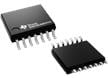





SN74LV8T164MPWREP

Texas Instruments
595-74LV8T164MPWREP
SN74LV8T164MPWREP

Mfr.:

Description:
Counter Shift Registers

Lifecycle:
New Product:
New from this manufacturer.
ECAD Model:
Download the free Library Loader to convert this file for your ECAD Tool. Learn more about the ECAD Model.
Mouser does not presently sell this product in your region.

Availability

Stock:

Product Attribute Attribute Value Select Attribute
Texas Instruments
Product Category: Counter Shift Registers
Delivery Restriction:
 Mouser does not presently sell this product in your region.
RoHS:  
Shift Registers
Parallel to Serial
8 Circuit
8 bit
TSSOP-14
CMOS
4 Input
40.1 ns
1.8 V
5.5 V
- 55 C
+ 125 C
Reel
Cut Tape
MouseReel
Brand: Texas Instruments
Country of Assembly: MY
Country of Diffusion: US
Country of Origin: MY
High Level Output Current: - 24 mA
Input Type: Serial
Low Level Output Current: 24 mA
Mounting Style: SMD/SMT
Number of Output Lines: 9 Output
Operating Supply Voltage: 1.8 V to 5.5 V
Product: Serial Shift Registers
Product Type: Counter Shift Registers
Factory Pack Quantity: 3000
Subcategory: Logic ICs
Products found:
To show similar products, select at least one checkbox
Select at least one checkbox above to show similar products in this category.
Attributes selected: 0

This functionality requires JavaScript to be enabled.

TARIC:
8542319000
USHTS:
8542390090
MXHTS:
8542399999
ECCN:
EAR99

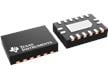
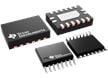
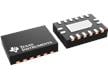
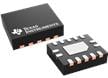
SN74LV8T164/SN74LV8T164-Q1 Shift Register

Texas Instruments SN74LV8T164/SN74LV8T164-Q1 Parallel-Load Shift Register contains an 8-bit shift register with asynchronous clear (CLR) input and AND-gated serial inputs. The gated serial (A and B) inputs permit complete control over incoming data. A low at either input inhibits new data entry and resets the first flip-flop to the low level at the next clock (CLK) pulse. A high-level input enables the other input, determining the first flip-flop's state. The data at the serial inputs can be changed while CLK is low or high, provided the minimum set-up time requirements are met. Clocking occurs on the low-to-high-level transition of CLK.