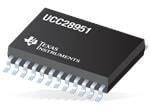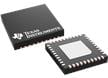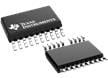





UCC28951PWR

Texas Instruments
595-UCC28951PWR
UCC28951PWR

Mfr.:

Description:
Switching Controllers Green phase-shifted full-bridge controll A 595-UCC28951PWT

ECAD Model:
Download the free Library Loader to convert this file for your ECAD Tool. Learn more about the ECAD Model.
Mouser does not presently sell this product in your region.

Availability

Stock:

Product Attribute Attribute Value Select Attribute
Texas Instruments
Product Category: Switching Controllers
Delivery Restriction:
 Mouser does not presently sell this product in your region.
RoHS:  
Full Bridge
1 Output
100 kHz
97 %
5 V
200 mA
- 40 C
+ 125 C
SMD/SMT
TSSOP-24
Reel
Cut Tape
MouseReel
Brand: Texas Instruments
Country of Assembly: Not Available
Country of Diffusion: Not Available
Country of Origin: TW
Description/Function: Phase-shifted full-bridge controller
Fall Time: 7 ns
Isolation: Non-Isolated
Moisture Sensitive: Yes
Operating Supply Current: 5 mA
Operating Supply Voltage: 8 V to 17 V
Product: Full-Bridge Controllers
Product Type: Switching Controllers
Rise Time: 9 ns
Series: UCC28951
Shutdown: Shutdown
Factory Pack Quantity: 2000
Subcategory: PMIC - Power Management ICs
Unit Weight: 148.300 mg
Products found:
To show similar products, select at least one checkbox
Select at least one checkbox above to show similar products in this category.
Attributes selected: 0

This functionality requires JavaScript to be enabled.

CNHTS:
8542399000
CAHTS:
8542310000
USHTS:
8542310030
ECCN:
EAR99

UCC28951/UCC28951-Q1 Full Bridge Controllers

Texas Instruments UCC28951/UCC28951-Q1 Full Bridge Controllers are enhanced phase-shifted full-bridge controllers built upon TI's industry-standard UCC28950. These controllers are fully compatible drop-in replacements for the UCC28950. The UCC28951/UCC28951-Q1 uses advanced control of the full-bridge and active control of the synchronous rectifier (SR) output stage. Programmable delays ensure ZVS operation over a wide range of operating conditions. This delay is done while the load current naturally tunes the switching delays of the secondary-side SRs. This functionality maximizes overall system efficiency.